How Much Does a New Fence Cost in Brown Deer, WI? A Guide to Materials and Installation
Planning a new fence involves more than comparing prices per foot. Learn how fence materials, property size, installation labor, gates, and site conditions affect the total cost of a fencing project in Brown Deer, WI, so you can compare estimates and make a more informed decision.
Installing a new fence can improve privacy, define property boundaries, protect outdoor spaces, and give your home a more finished appearance. However, the total cost can vary considerably depending on the fence you choose and the conditions surrounding your property.
For homeowners in Brown Deer, WI, understanding these expenses before requesting estimates can make the planning process easier. A simple fence around a small yard may require relatively little material, while a long privacy fence with multiple gates, uneven terrain, or an existing structure to remove can involve substantially more work.
The most useful way to compare fencing prices is to look beyond the advertised cost per linear foot. Material selection, fence height, post installation, labor, site preparation, and local requirements all contribute to the final investment.
What Does Fence Installation Cost Per Linear Foot?
Fence contractors often use linear feet to estimate the amount of fencing material and labor required for a project. One linear foot represents one foot of fence measured along its planned route.
Although cost-per-foot estimates can help you compare options, there is no single price that applies to every property. Material quality, fence design, regional labor rates, and installation conditions all influence the quote.
As a general rule, basic chain-link fencing often costs less upfront than decorative metal fencing or premium privacy systems. Wood offers a range of price points, while vinyl and composite products may require a larger initial investment depending on the design and quality.
For an accurate comparison, ask for estimates based on the same fence length, height, material grade, gate configuration, and installation requirements.
A quote that appears less expensive may exclude important items such as removal of an old fence, gate hardware, difficult post installation, or disposal fees.
1. Wood Fencing: Flexible Designs at Different Price Points
Wood remains a popular choice for homeowners who want a traditional appearance, natural texture, and flexibility in fence design.
The cost depends on the type of wood, board dimensions, fence height, spacing, and finish. A straightforward picket fence may require less material than a tall privacy fence with closely spaced boards.
What Affects the Price of Wood Fencing?
Wood species: Different woods vary in availability, durability, and purchase price. Pressure-treated lumber and cedar are common options, but they have different appearance and maintenance characteristics.
Fence style: Picket, horizontal-board, shadowbox, and solid privacy designs use different amounts of lumber and hardware.
Finishing requirements: Depending on the material and product, staining, sealing, or painting may add to the initial or ongoing cost.
Installation complexity: Slopes, obstacles, and difficult access can increase the labor required to align posts and attach boards.
Wood may be attractive if you want a customizable fence that complements your home's exterior. However, consider future maintenance when comparing its total cost with lower-maintenance alternatives.
2. Vinyl Fencing: A Low-Maintenance Alternative
Vinyl fencing appeals to homeowners who prefer a clean, consistent appearance without routine staining or painting.
Available styles include privacy panels, picket designs, and decorative sections. The price depends on panel height, product quality, color, design details, and the supporting posts and hardware.
Vinyl may cost more initially than some basic wood or chain-link options, but its reduced need for refinishing can be appealing to homeowners who want to limit recurring maintenance.
That does not mean vinyl is maintenance-free. It still needs occasional cleaning and inspection, and product quality affects resistance to impact and weather-related stress.
For Brown Deer properties, ask about the manufacturer's recommendations for winter conditions, temperature changes, installation spacing, and repairs before selecting a vinyl system.
3. Chain-Link Fencing: A Practical Option for Larger Areas
Chain-link fencing is often considered when the primary goal is to define a boundary, contain pets, or secure an outdoor area without creating a solid visual barrier.
Its open construction typically uses less screening material than a privacy fence. Galvanized and coated options may also provide different appearances and levels of corrosion protection.
The final price depends on fence height, wire and coating specifications, post spacing, gates, and site preparation.
Chain-link may be suitable for homeowners who prioritize function and visibility over privacy. It can also be useful for enclosing larger yards where a solid fence would be unnecessarily expensive.
Before choosing it, consider how the fence will look alongside your landscaping and whether the proposed location and design meet local requirements.
4. Aluminum and Decorative Metal Fencing: Style and Visibility
Aluminum and other decorative metal fencing can provide a more refined appearance while preserving views across the property.
These systems are commonly selected for front-facing areas, landscaped yards, and spaces where an open design is preferred. Costs vary with the metal, finish, panel style, height, and decorative features.
A basic design with simple vertical bars generally differs in price from a customized system with ornamental details, specialty posts, or more elaborate gates.
When comparing metal fencing, ask about protective finishes, warranty coverage, and the availability of replacement parts. These details help you understand the long-term value beyond the initial installation price.
5. Composite Fencing: Higher Initial Cost, Different Maintenance Needs
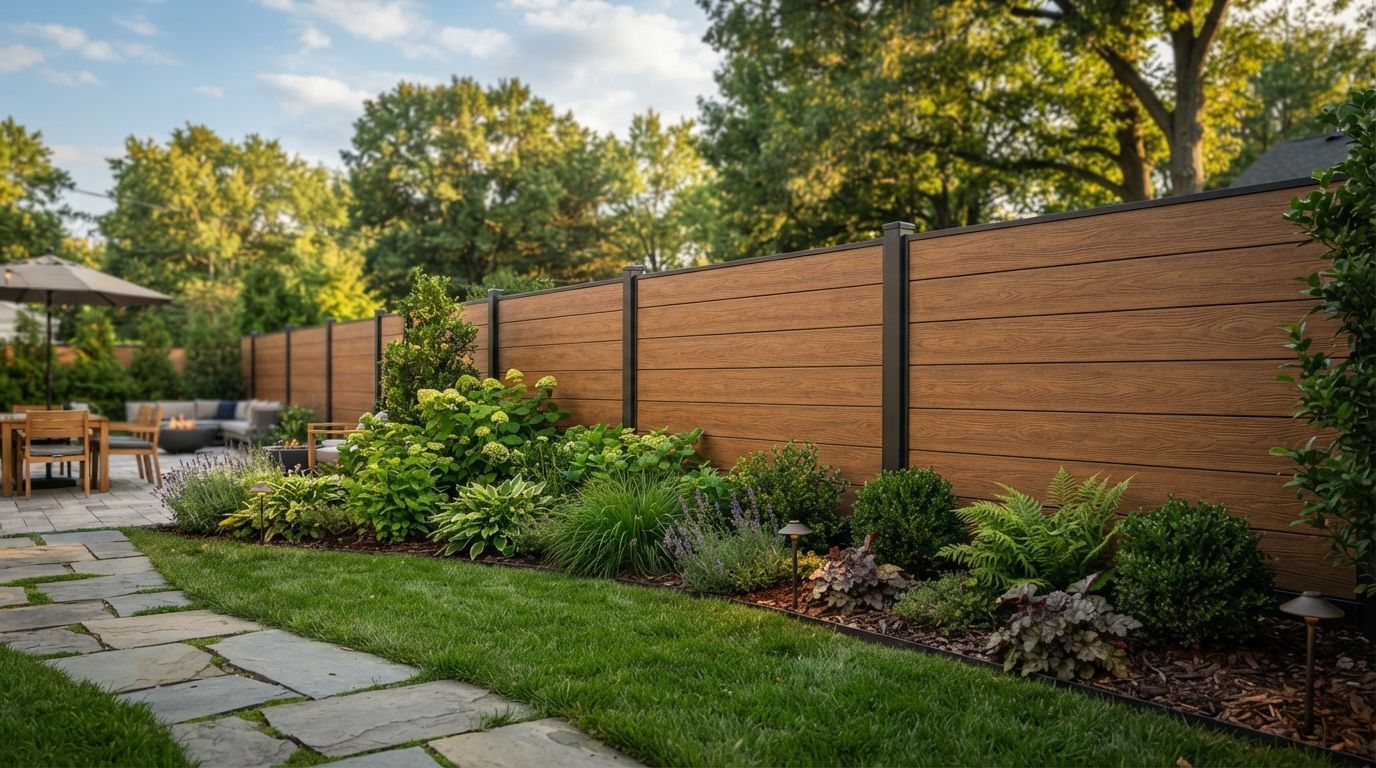
Composite fencing combines materials such as wood fibers and plastics to create manufactured boards or panels. Some products imitate natural wood grain, while others offer a more contemporary finish.
Composite systems can appeal to homeowners who want a wood-inspired appearance without routine staining or painting. However, their initial price may be higher than basic wood options.
The final cost depends on the product, panel design, fence height, structural components, and installation requirements.
Composite products are not all identical, so compare manufacturer specifications, weather performance, maintenance instructions, and warranties rather than relying on general claims about durability.
This material may be worth considering if you expect to keep the fence for many years and place a high value on reducing routine maintenance.
What Other Expenses Should You Include in Your Fence Budget?
Material prices are only one part of a complete fencing estimate. Several additional expenses can affect the total project cost.
Fence Removal and Disposal
If an existing fence needs to be removed, ask whether the estimate includes dismantling, hauling, and disposal. Old concrete footings or damaged posts may require additional labor.
Removing the previous fence before installation can also reveal problems with the ground or property layout that were not obvious during the initial inspection.
Gates and Hardware
Gates add convenience, but they also increase project costs. A small walk-through gate requires different hardware and support from a wide gate intended for lawn equipment or other large items.
The number of gates, their width, latch type, hinges, and decorative features all influence the final price.
Think about how you use your yard before deciding where gates should go. A well-planned entrance can prevent the need for expensive changes later.
Post Holes and Ground Conditions
Every fence needs adequate support, but the work involved in installing posts varies by property.
Rocky soil, buried obstructions, difficult access, and existing concrete can make post installation more labor-intensive. Slopes may also require adjustments to panel placement and alignment.
In Wisconsin, installation planning should account for local ground conditions and winter freeze-thaw cycles. Ask the contractor how the proposed post and footing design suits the site.
Property Layout and Access
A straightforward rectangular yard may be easier to measure and enclose than a property with multiple corners, landscaping obstacles, retaining walls, or limited equipment access.
The shape of the fence line affects the number of posts, corners, transitions, and cuts required. These details can influence labor even when two projects have similar total lengths.
Permits and Related Requirements
Brown Deer requires a building permit before a fence can be constructed. The village also asks homeowners to submit the proposed location on a copy of the property survey and provide information about the fence type and height. Review the current requirements and fees before starting the project.
Official guidance is available on the Village of Brown Deer's fence guidelines page.
Permit requirements and any necessary adjustments should be included in your planning rather than treated as an afterthought.
How to Estimate the Amount of Fencing You Need
Measuring the proposed fence line gives you a starting point for comparing quotes.
For a simple rectangular yard, add the lengths of the four sides that will be fenced. If one side is already enclosed by a suitable existing structure and does not need fencing, exclude that side from the new fence measurement.
For example, a proposed fence measuring 40 feet across the back and 60 feet along each side would require approximately 160 linear feet if those are the only sections being installed.
This is a measurement example, not a price estimate. Your actual material requirements may differ because of gate openings, corners, layout changes, and the manufacturer's panel dimensions.
For irregular yards, measure each section separately and mark the proposed gate locations. A property survey can help clarify boundaries and reduce the risk of placing the fence in the wrong location.
Do not assume that a neighbor's fence, landscaping edge, or driveway marks the exact property line.
How to Compare Fence Installation Quotes
Obtaining more than one estimate can help you understand the range of options available for your project. The key is to make sure you are comparing equivalent work.
Ask each contractor to specify:
- The fence material, manufacturer, style, and height.
- The total linear footage and number of gates.
- Whether removal and disposal of an existing fence are included.
- The post and footing installation method.
- Site preparation and any anticipated additional charges.
- Permit-related responsibilities and costs.
- Warranty coverage for materials and installation.
- Expected maintenance and available repair options.
An itemized estimate is easier to evaluate than a single total without an explanation. It can also reveal why one proposal costs more than another.
Be cautious about choosing a contractor solely because the initial quote is the lowest. Material quality, installation details, communication, and warranty terms all contribute to the overall value of the project.
How to Get Better Long-Term Value From Your Fence
The least expensive fence is not necessarily the least expensive option over time. A material that requires regular refinishing may involve ongoing expenses, while a higher-priced product may reduce certain maintenance tasks.
Consider how long you expect to remain in your home, how much maintenance you are willing to perform, and what the fence needs to accomplish.
If privacy is your priority, compare the cost of complete privacy panels rather than pricing materials that do not provide the same coverage. If your main goal is to define a boundary around a large yard, an open design may meet your needs with less material.
You can also control costs by finalizing the layout before work begins, selecting standard rather than highly customized designs, and planning gate placement carefully.
However, do not cut costs by overlooking necessary post support, choosing unsuitable materials, or skipping required approvals. Poor installation can lead to repairs that outweigh the initial savings.
Plan Your Brown Deer Fence Project With Confidence
A fence installation budget should account for the material, total length, height, gates, labor, site conditions, and applicable permit requirements. Comparing these elements together gives you a more realistic understanding of the investment than relying on a general price per foot.
Start by identifying your main goals, measuring the proposed fence line, and comparing materials that suit your property. Then request detailed estimates that clearly explain what is included.
Brown Deer Fence can help you explore fencing options that match your property's layout, privacy needs, appearance preferences, and budget. With careful planning and a clear estimate, you can choose a fence that serves your home well without overlooking important project costs.